
The Importance of Water
WisCorps’ Individual Placement position of Aquatic Ecology Technician supports research at Voyageurs National Park through fisheries data collection, invasive species monitoring, and freshwater research.
Written by Claire McRoberts
Voyageurs National Park spans over 200,000 acres, resting on the Minnesota-Canada border, just west of the Boundary Waters Canoe Area Wilderness. Of the over 200,000 acres, one-third of the park consists of water. The park depends on the health and integrity of the large lakes, interior lakes, rivers, and streams within its boundaries. As an Aquatic Ecology Technician through WisCorps, I am able to assist ecologists with the collection of fisheries and aquatic ecology data on freshwater lakes, participate in research and monitoring focused on aquatic invasive species, and more.
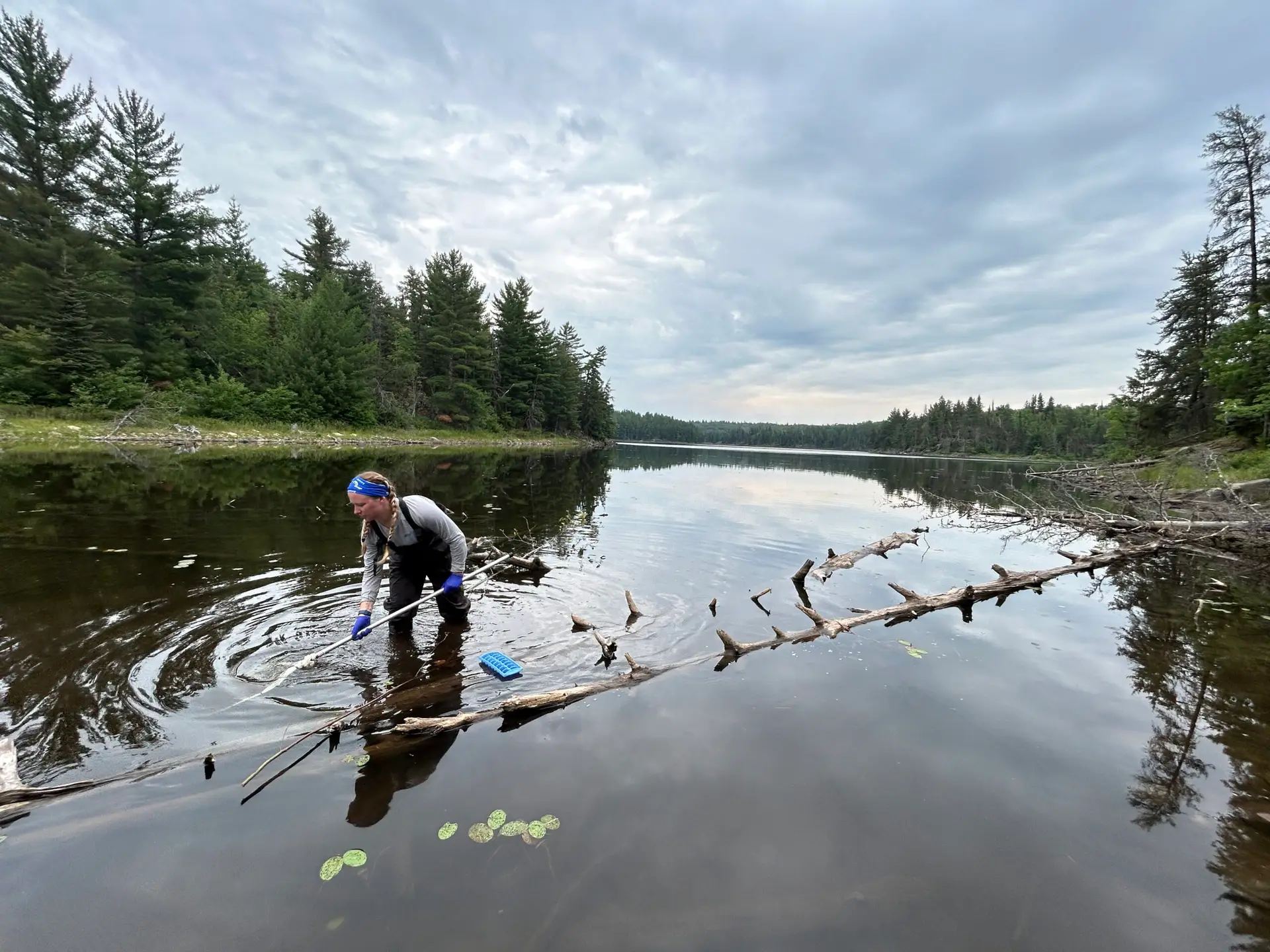
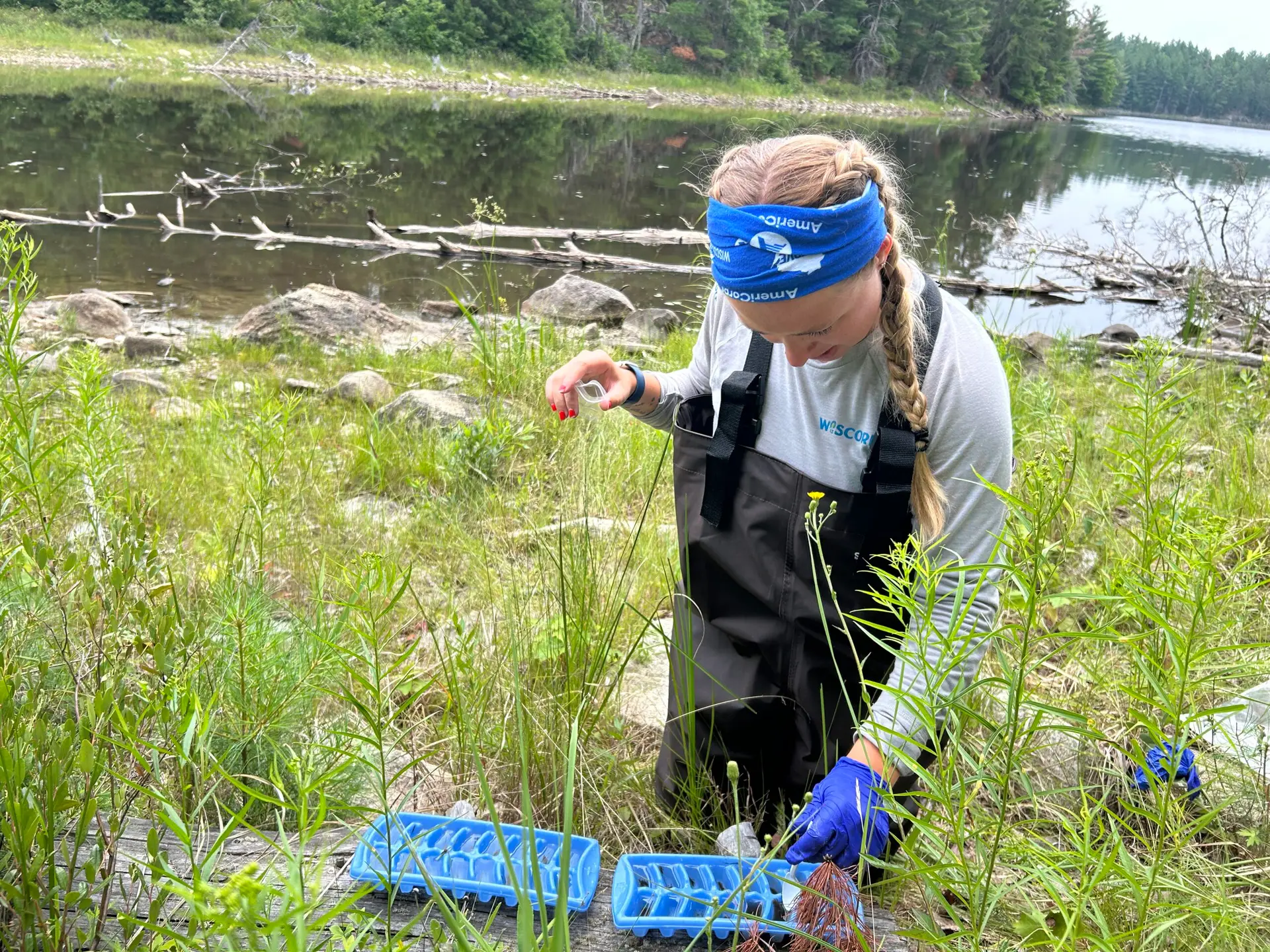
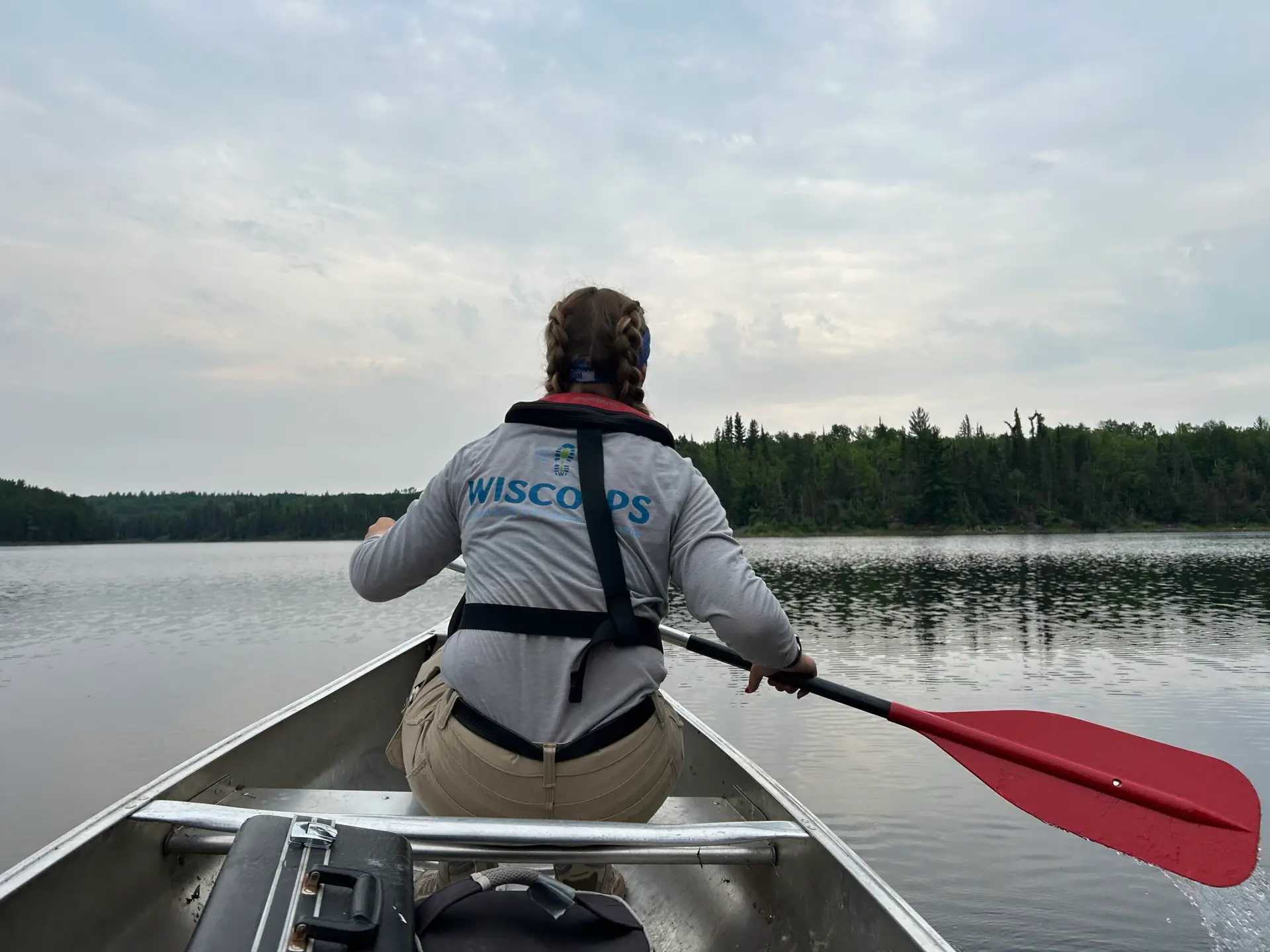
The main focus of the program is to collect water quality data on the large lakes and a handful of interior lakes. We sample Rainy Lake, Kabetogama Lake, Crane Lake, Sand Point Lake, Namakan Lake, and Little Vermilion Lake as part of our large lake water quality sampling. Using water sampling equipment such as a YSI Sonde, Secchi Disk, and Van Dorn water sampler, we are able to gather a range of information on the water’s health, including temperature, dissolved oxygen, and chlorophyll-a. On large lakes, tows of zooplankton and veligers to determine the presence of invasive species like Zebra Mussles. Water quality is researched similarly when doing interior lakes, with mercury samples added in to a few of the locations. Much care is taken in the park to prevent the spread of invasive species to the interior lakes, with restrictions on boating activity.
Beyond water sampling, we are monitoring the spread of invasive species. Zebra mussels, Rainbow Smelt, Spiny Water Flea, Rusty Crawfish, and Chinese Mystery Snail are invasive species that the Aquatics team spends time looking for. This looks like setting nets, snorkeling in search of snails, and setting traps for crayfish. While finding invasive animals is not ideal, it is important to understand what is in the water and how it may impact the quality of the ecosystem.
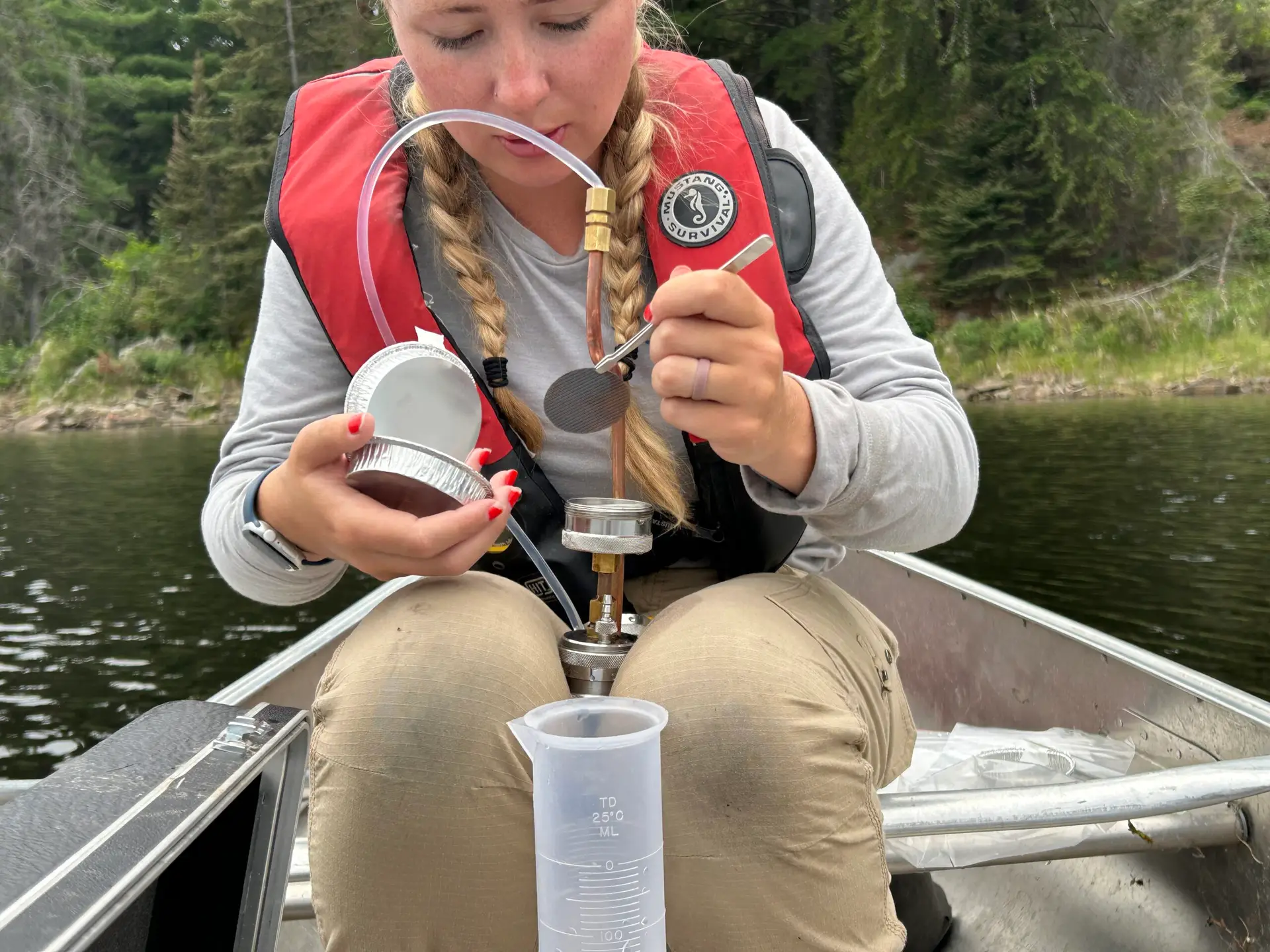
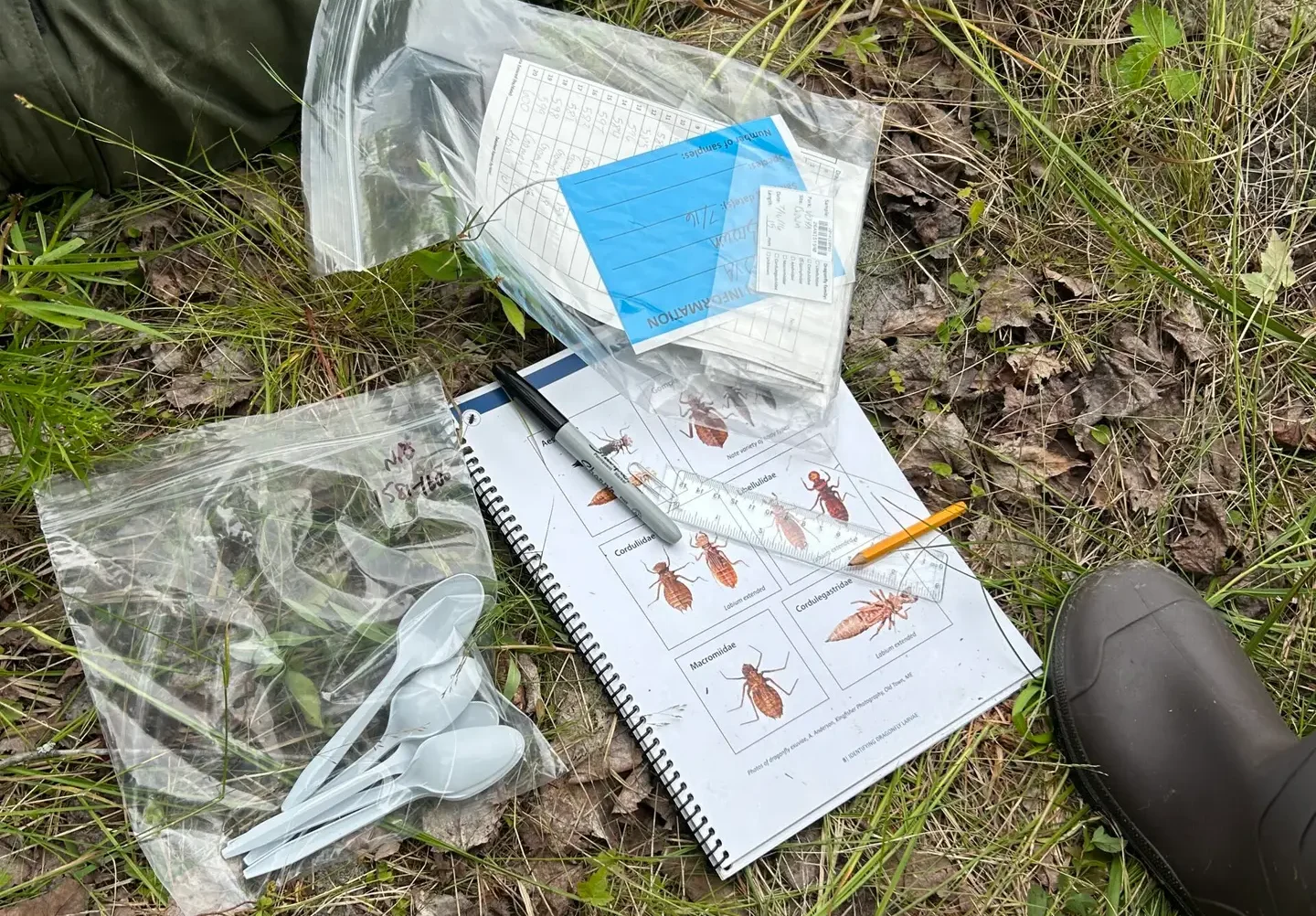
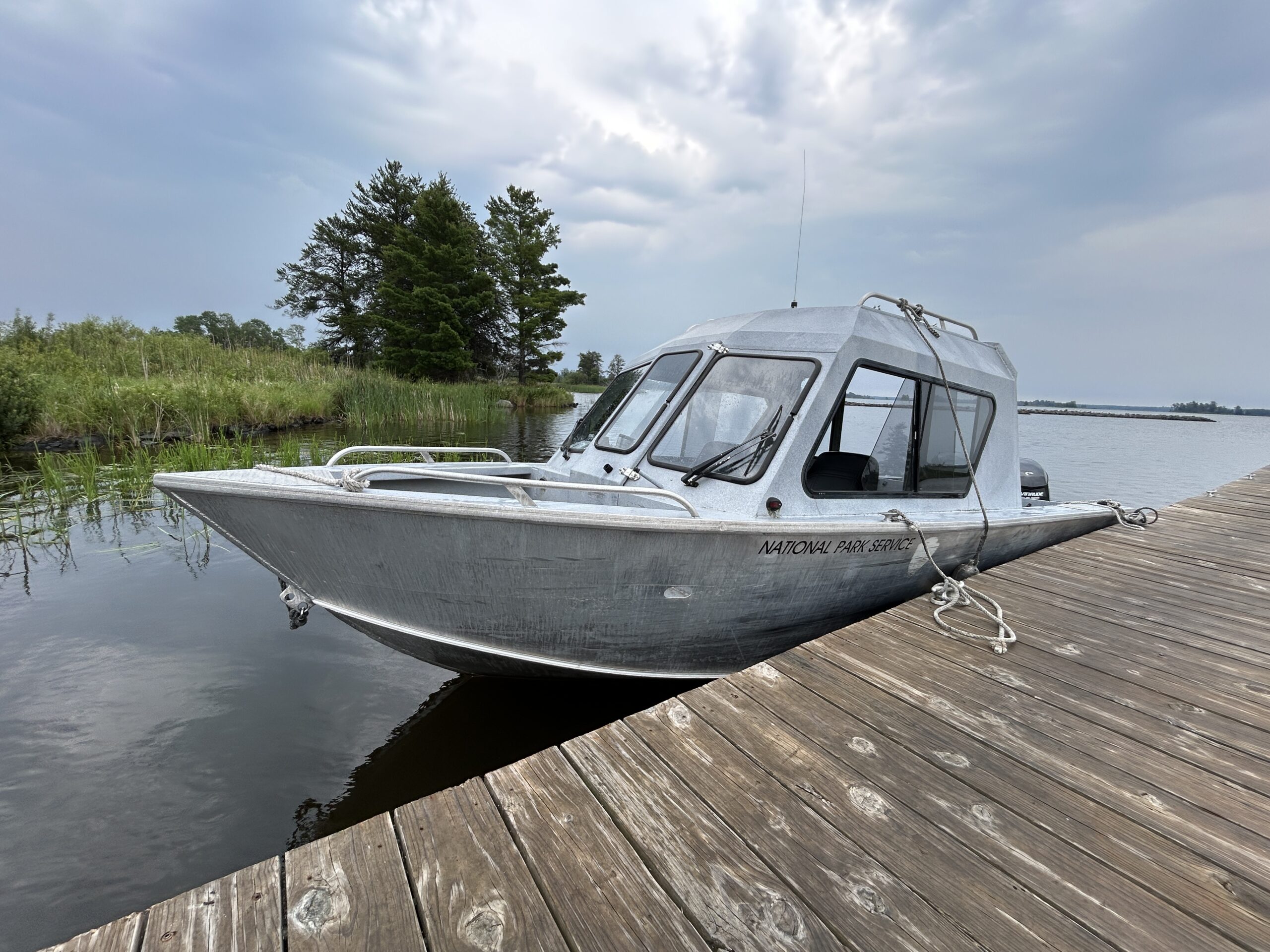
Through this position, I have also had the chance to collect dragonfly nymphs on interior lakes to test for mercury, map submerged aquatic vegetation, and go on a side quest or two assisting forestry with invasive species removal on land. Each day as an Aquatic Ecology Technician is unique, and some days are longer than others. The ability to travel to remote areas of the park, grow in my capabilities as an ecologist, and make an impact by researching such a large area of freshwater makes the challenges worth it.