“This Is My Swamp”: A Day in the Field With Our Upham Woods Individual Placement
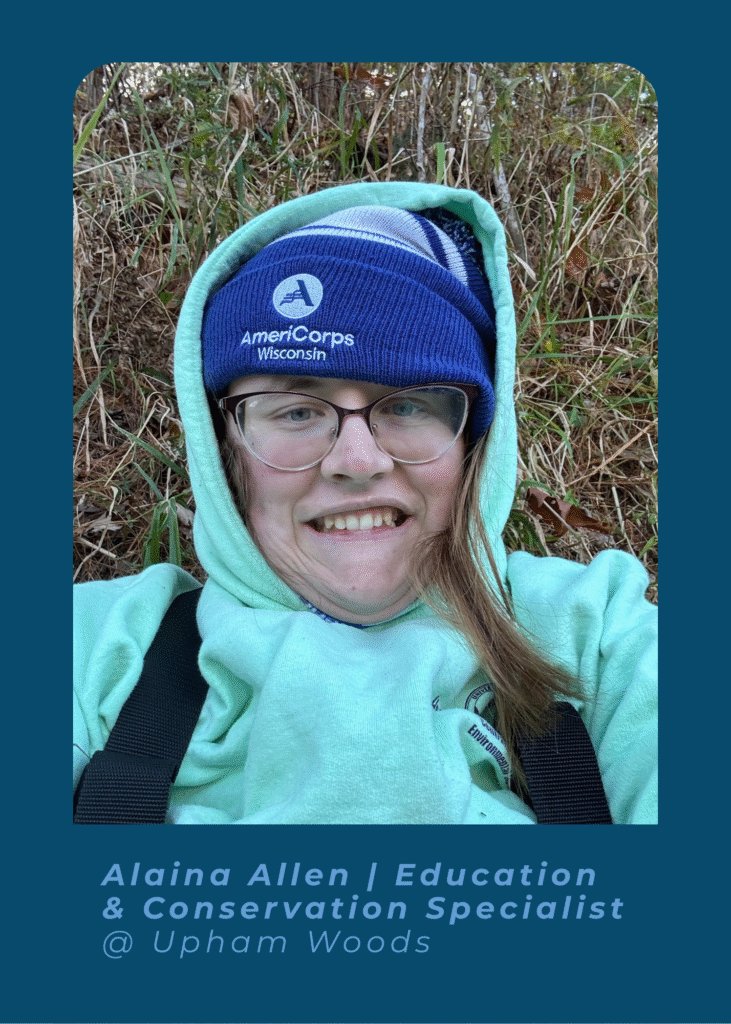
Alaina Allen, Education and Conservation Specialist at Upham Woods | Individual Placement
There’s something unmatched about watching young learners discover a wetland for the first time—especially when that moment is guided by one of our two WisCorps Individual Placements serving at Upham Woods.
Earlier this Fall, 5th and 6th graders from St. Patrick’s Mauston spent the day knee-deep (literally) in environmental education. Their group was led by Alaina, who has been serving as an IP at Upham Woods since September 2025. During their pond study session, Alaina led students through an exploration of why wetlands matter and how tiny invertebrates can reveal a lot about ecosystem health.
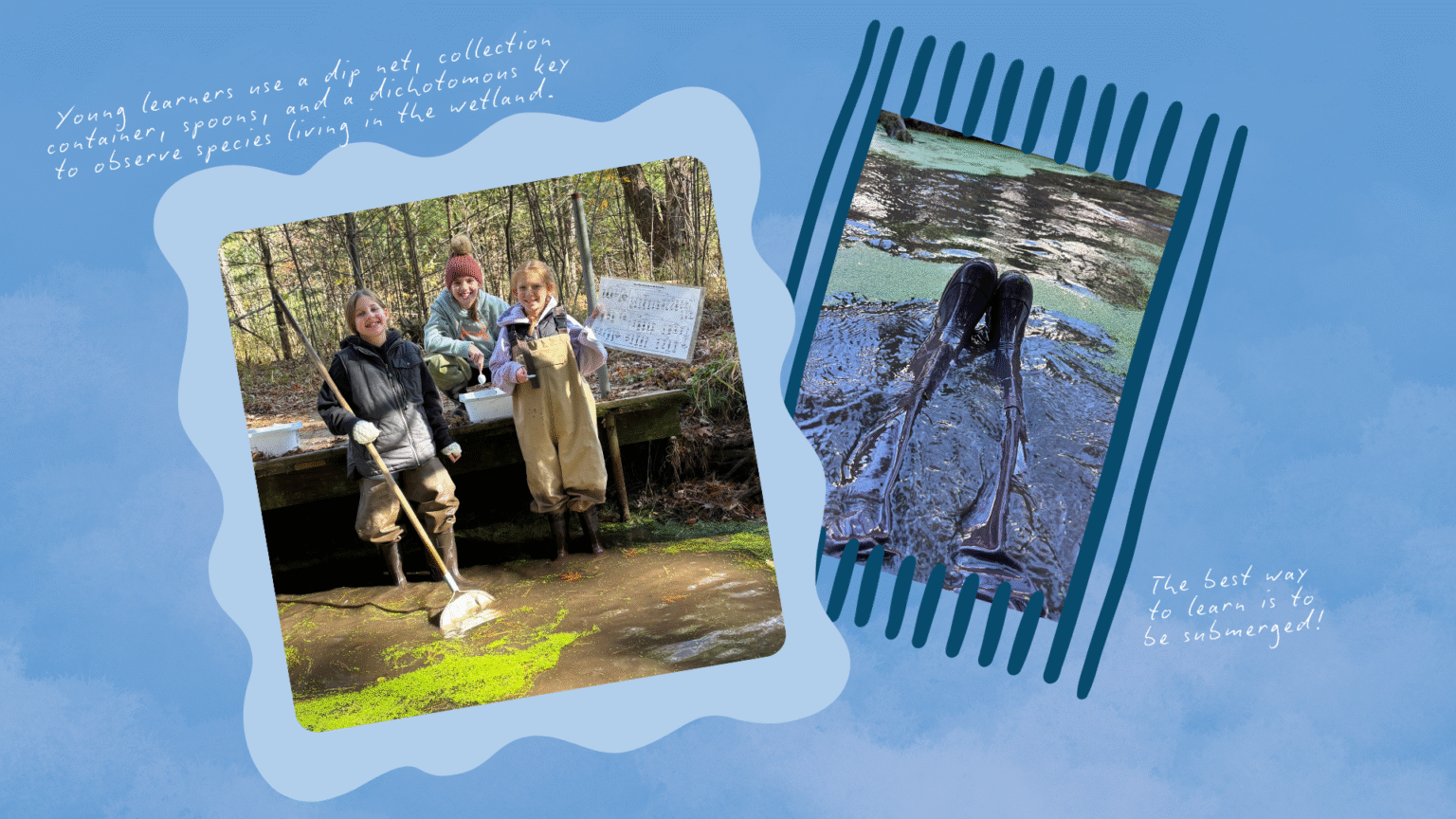
Wetlands function as natural filters, trapping pollutants, supporting biodiversity, and creating essential habitat for the species that hold ecosystems together. One of the best ways to understand wetland health is by studying who lives there. So the group grabbed their nets, got their boots muddy, and collected field samples from the wetlands at Upham Woods.
And then came the moment that likely tied the experience to a lifelong memory.
As Alaina waded into the water, fully covered by hip waders and green gear, the kids immediately dubbed her “Shrek.” The fun especially sunk in when she grinned and said, “This is my swamp!”
A shared laugh allowed the barriers of curiosity to fall into comfort. Education came easily as the students intently learned how to identify everything from frogs to scuds, water spiders to dragonfly larva—each new discovery turning into a conversation about community science, pollution indicators, and how every species, no matter how tiny, tells a story about the health of a place.
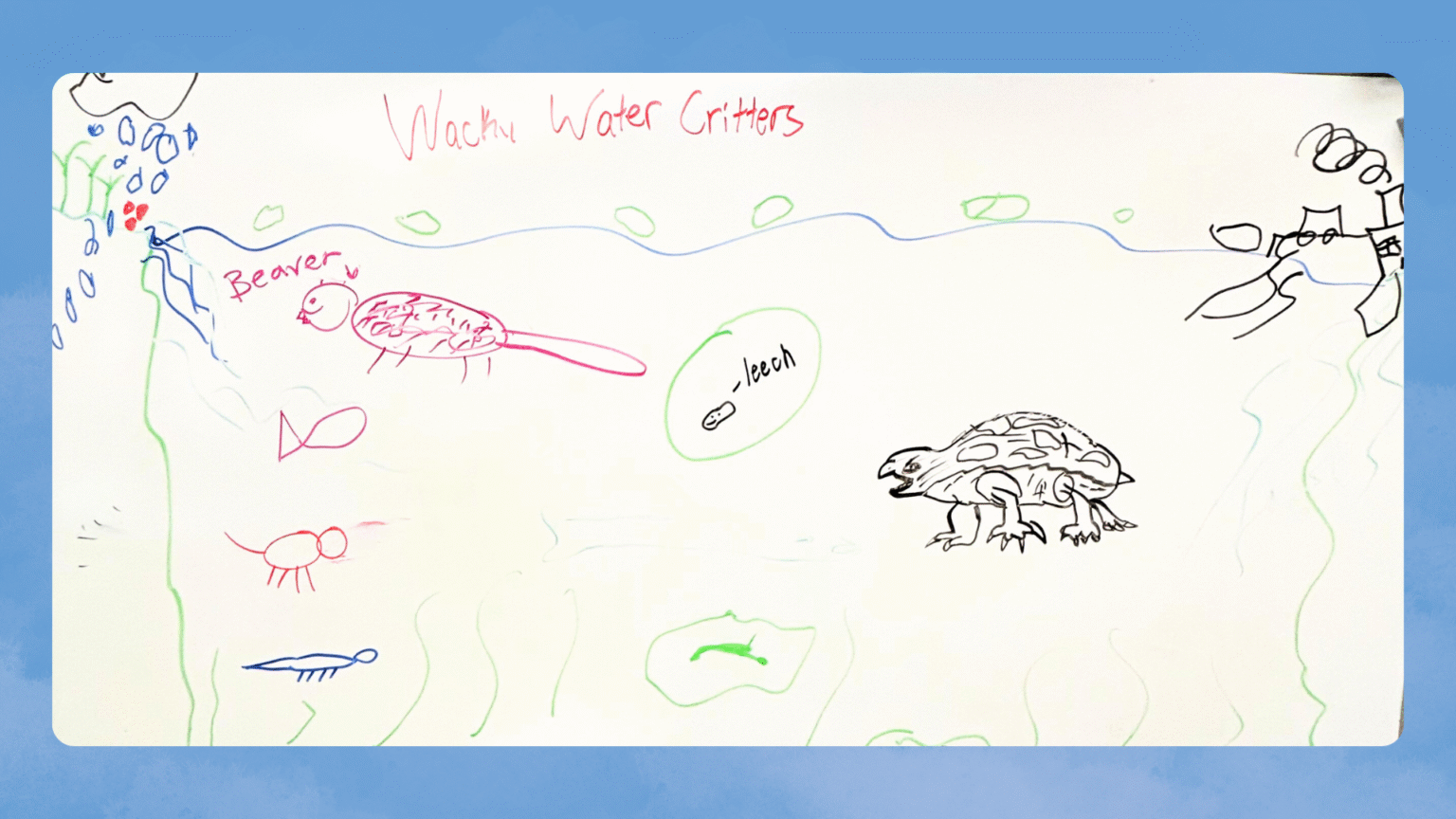
Before students headed outside, they sketched what they thought lived in a wetland. By the end of the field trip, they could identify real species, use scientific tools, and connect their observations to the bigger picture of conservation.